Posted
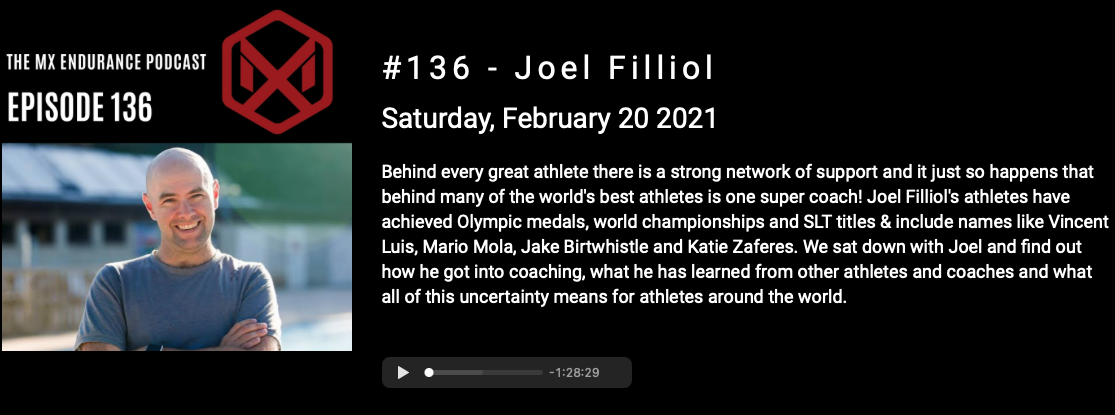
Joel joined Tim and James on the MX Endurance Podcast for a wide ranging discussion including ITU/World Triathlon athletes racing Ironman and long distance, on Super League and PTO races, Tokyo Olympics, planning challenges, opportunity costs, and more:
https://www.mxendurance.com/podcast/episodes/136-joel-filliol
Posted

Joel joined Grant Giles and Mark Turner on their podcast The Coaching Cartel for a wide ranging chat on coaching topics from establishing relationships with athletes, the collaborative model of coaching, communication, commitment, developing athletes, coach development, manage ego in training environments, the daily coaching process, and much more.
Part 1 of The Coaching Cartel podcast with Joel Filliol
Part 2 of The Coaching Cartel podcast with Joel Filliol
Mark and Giles have had a number of excellent discussions on their podcast relevant to coaches in triathlon or any sport, be sure to check out their back catalogue of episodes.
Posted

Photo by Tommy Zaferes
Triathlon Australia (TA) is today delighted to announce the appointment of Joel Filliol as the TA Podium Centre Head Coach.
Aligning with TA High Performance strategy, Filliol will be entrusted with leading TA’s pre-eminent training environment with a focus on working with athletes capable of podium performances at major international events.
“I’ve been working closely with Australian athletes and staff over the last few years, and have been fortunate to support some very strong international performances through these partnerships,
When the possibility arose to expand this relationship through the Podium Centre Head Coach role, I knew the quality of the people involved, the vision and ambition of Triathlon Australia, and that this was the right time, and the right opportunity for me to make a long-term contribution to the success of Australian athletes on the world’s stage.”
Posted
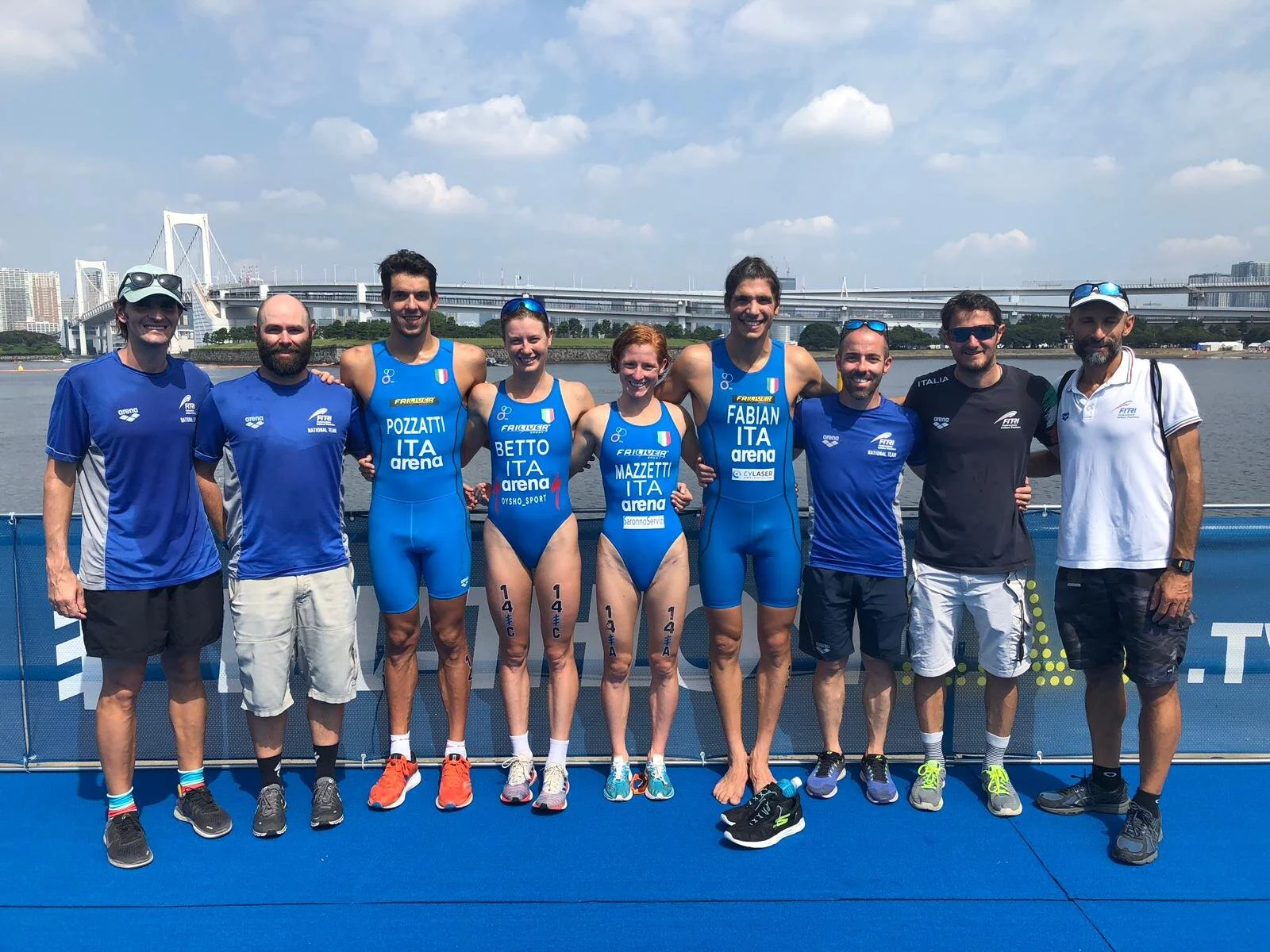
Tokyo Olympic Test Event 2019
At the conclusion of my role as Olympic Performance Director of the Federazione Italiana Triathlon, I wanted to share a few reflections of the past four years since I took up the role in 2017. Like for many working in Olympic sport, my role was aligned to the four year Olympic cycle. As my contract came to a conclusion, with deep reflection during the pandemic, and the postponement of Tokyo 2020 Games, I evaluated my coaching looking forward with an open mind, without being held back by constraints and arbitrary time frames, as I have done a number of other times during my career over the past 20 years. I considered my personal values, that I am driven by the people, relationships and environment where I chose to work, and have high standards for where I put my time and energy. It was clear a new direction and fresh challenge was the right step for me and my family to move forward with renewed energy.
The Italian National Team and Olympic Program has made the challenging first steps to creating the conditions to reach the potential of the Italian athletes, coaches and staff involved. The change process is never easy and raising the standards and expectations of performance has meant that some could join this step forward and some could not, however this is a natural part of high performance. These changes were supported not only through increasing performance standards, but allowing the athletes and coaches the space to grow and take ownership of their careers, and of their own processes and choices. In addition investments were made in new staff and health support, and the establishment of a model of working based on providing support connected to the objective performances achieved, while also investing for the future in daily environments where the next performances will be developed.
At the beginning of the Tokyo Olympic cycle, it was clear FITRI needed to make significant changes in order to achieve performances commensurate with the investments made into its programs. While resistance was faced to change the way FITRI operated from the long held deeply entrenched status-quo, the performances achieved by the Italian Team in the lead up to the Tokyo Olympic Games speak for themselves. With the Italian women ranked as the 3rd country in the Olympic Ranking list as of December 2020, one of only three countries with a full quota of 3 women, behind only Great Britain and the USA, a podium performance at the individual Olympic Test event and a 4th place in the Olympic Test Event Mixed Team Relay, followed by three women in the top 11 of the 2019 Grand Final in Lausanne, and many other performance highlights including both Junior and U23 World Championship Medallists.
While there is much work to continue to do on the path towards the Italian Team achieving its ultimate sporting potential both on the field of play and off, great strides have been made in these four years, with the groundwork for the attitude changes, process changes, and background way of working to support Italian athletes achieving the highest levels on the World and Olympic stages. The opportunity is now to keep moving forward towards higher standards, higher expectations and being better every day in every part of the organisation must be taken at this critical juncture, before the eventual Tokyo 2021 and into the Paris 2024 Olympic Cycle.
While it was time for me personally to make a change at the end of this 4 year cycle, I am fully confident that Alessandro Bottoni possesses all the qualities to continue the project we started together towards Tokyo 2021 and beyond. Over these years I have shared the process and philosophy with Alessandro at every step, and I know he will find the best solutions to support the athletes to great performances. President Luigi Bianchi, along with Alessandro had the courage to initiate such a significant change and new approach for the Italian Team and we have seen very positive steps, and everything that is required to keep moving forward is within Alessandro and all the staff involved to create a strong future for Italian Triathlon. I want to thank President Luigi Bianchi, Secretary General Ivan Braido, and Manager of the Area Tecnica Gabriella Lorenzi, and all the staff for the unwavering support during my time with FITRI and I wish all the most success for the future in 2021 and beyond.
Grazie millie, e in bocca al lupo a tutti!
Posted
Video by Super League Triathlon from our camp in August 2020
Posted
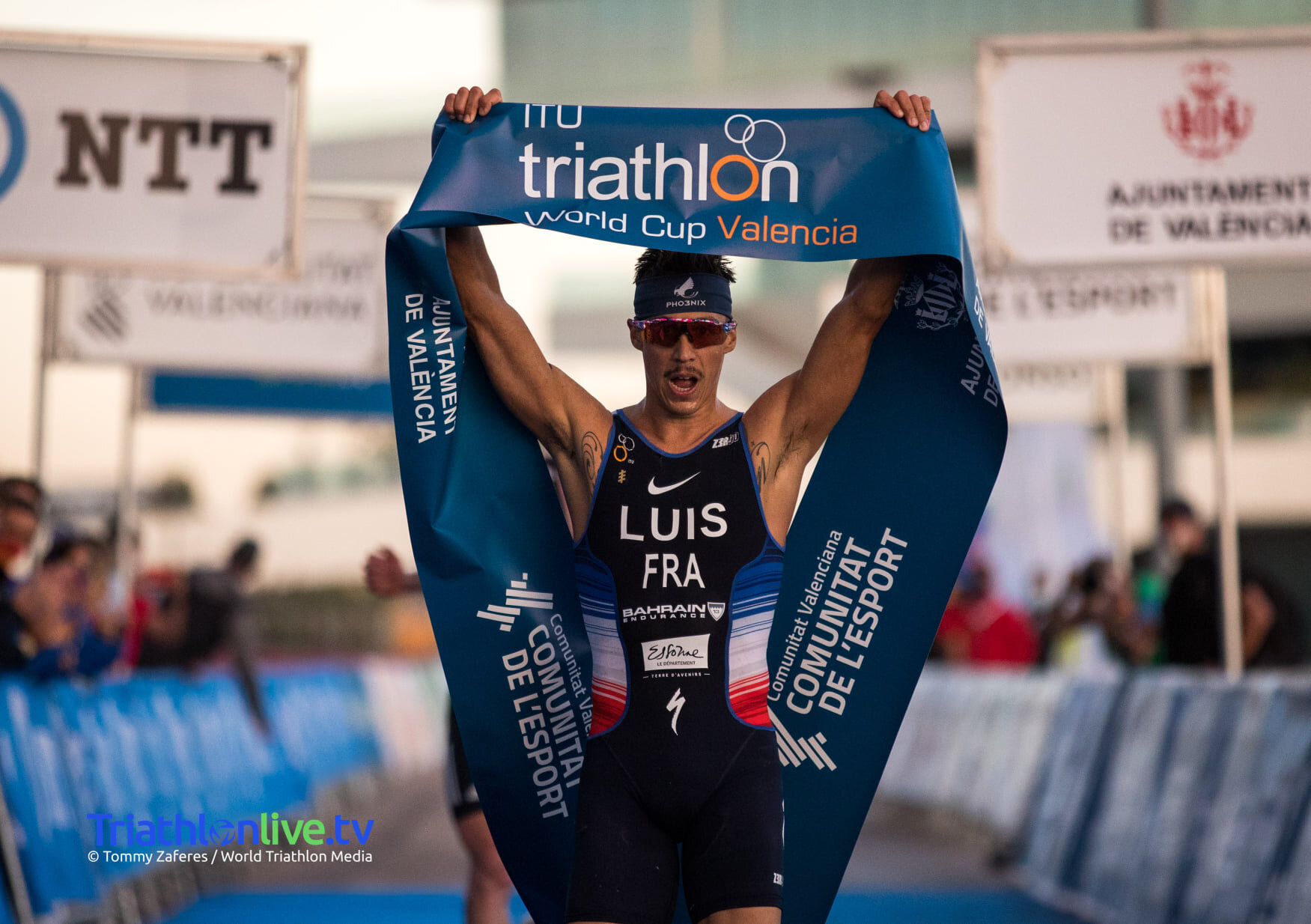
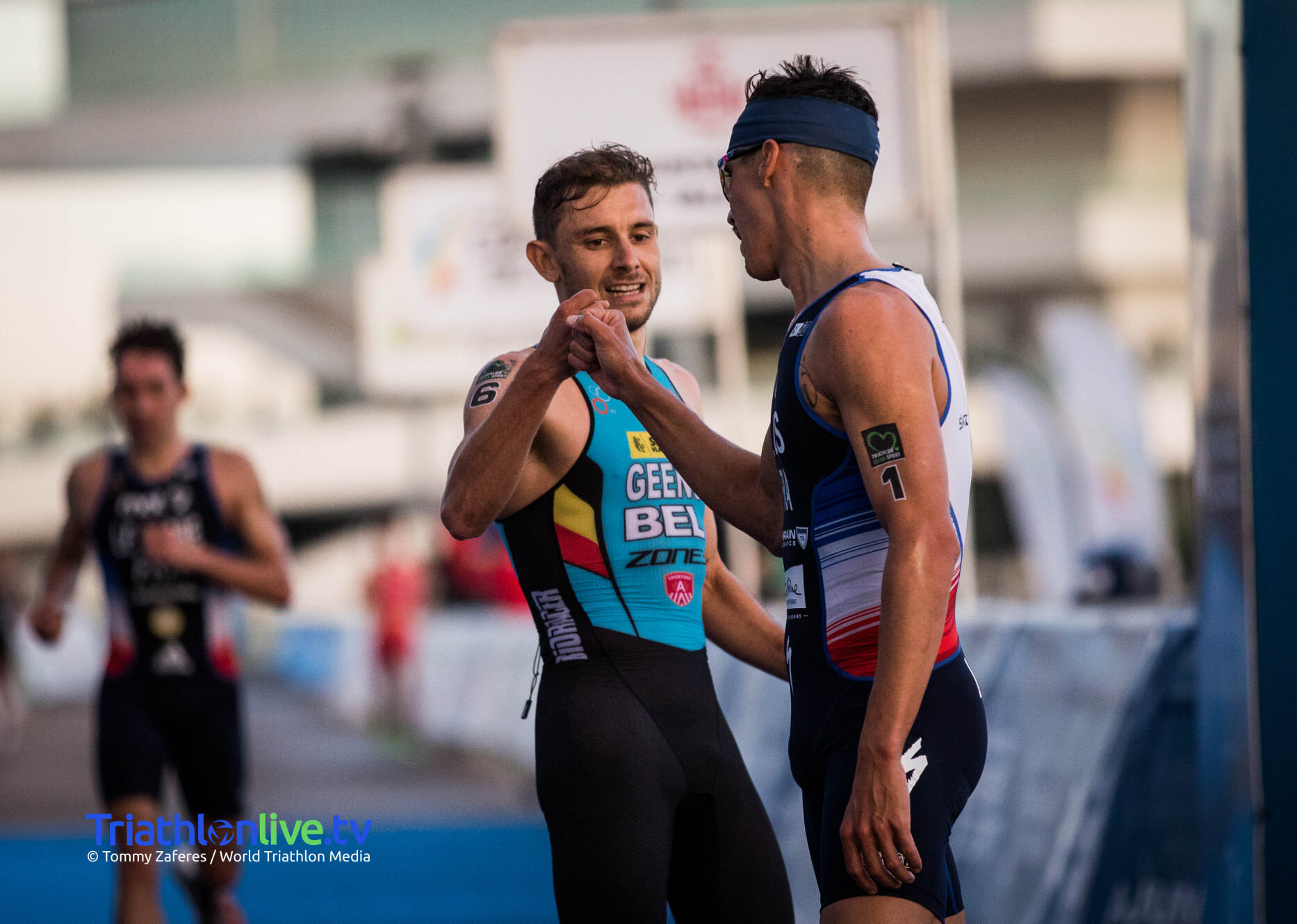
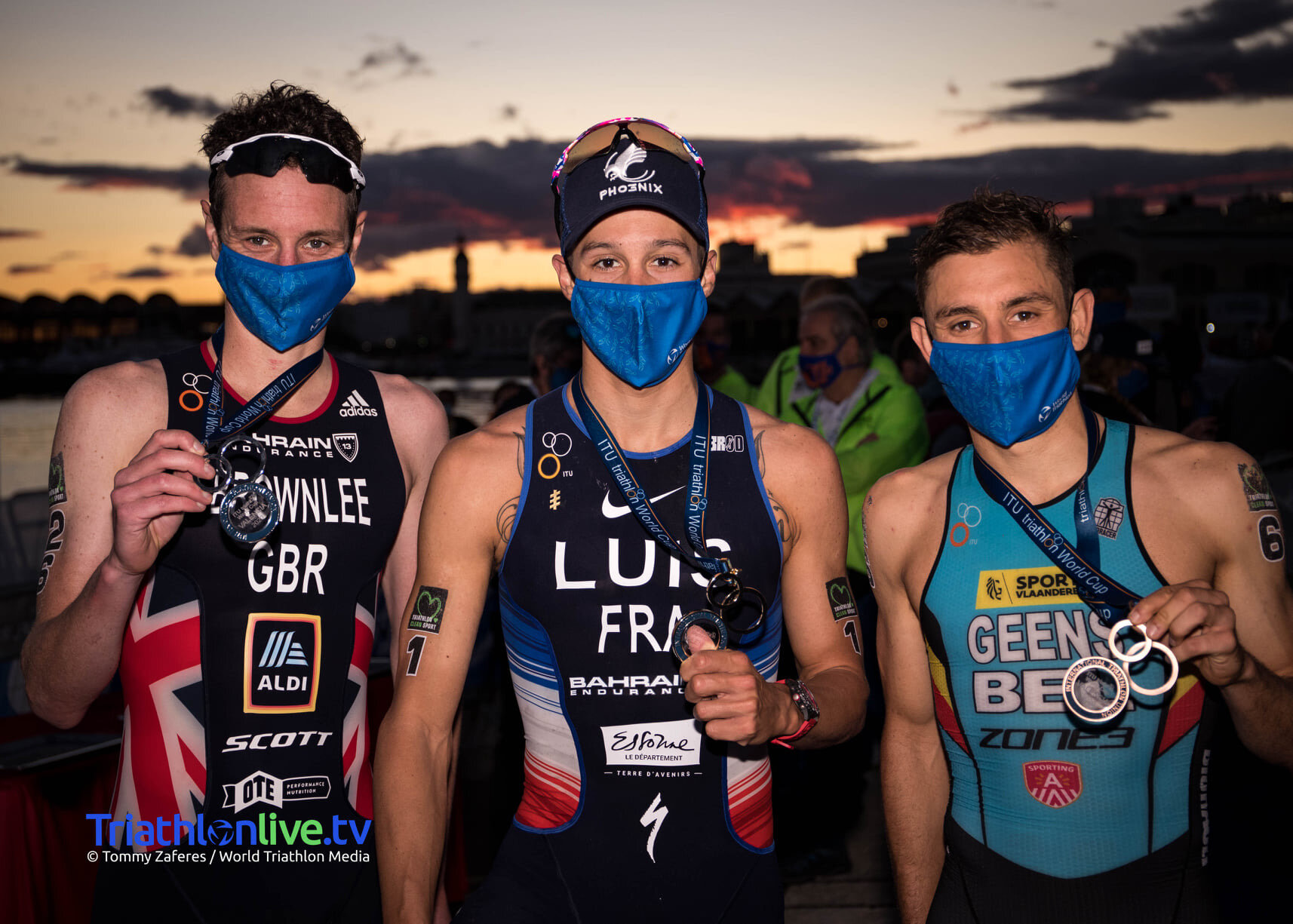
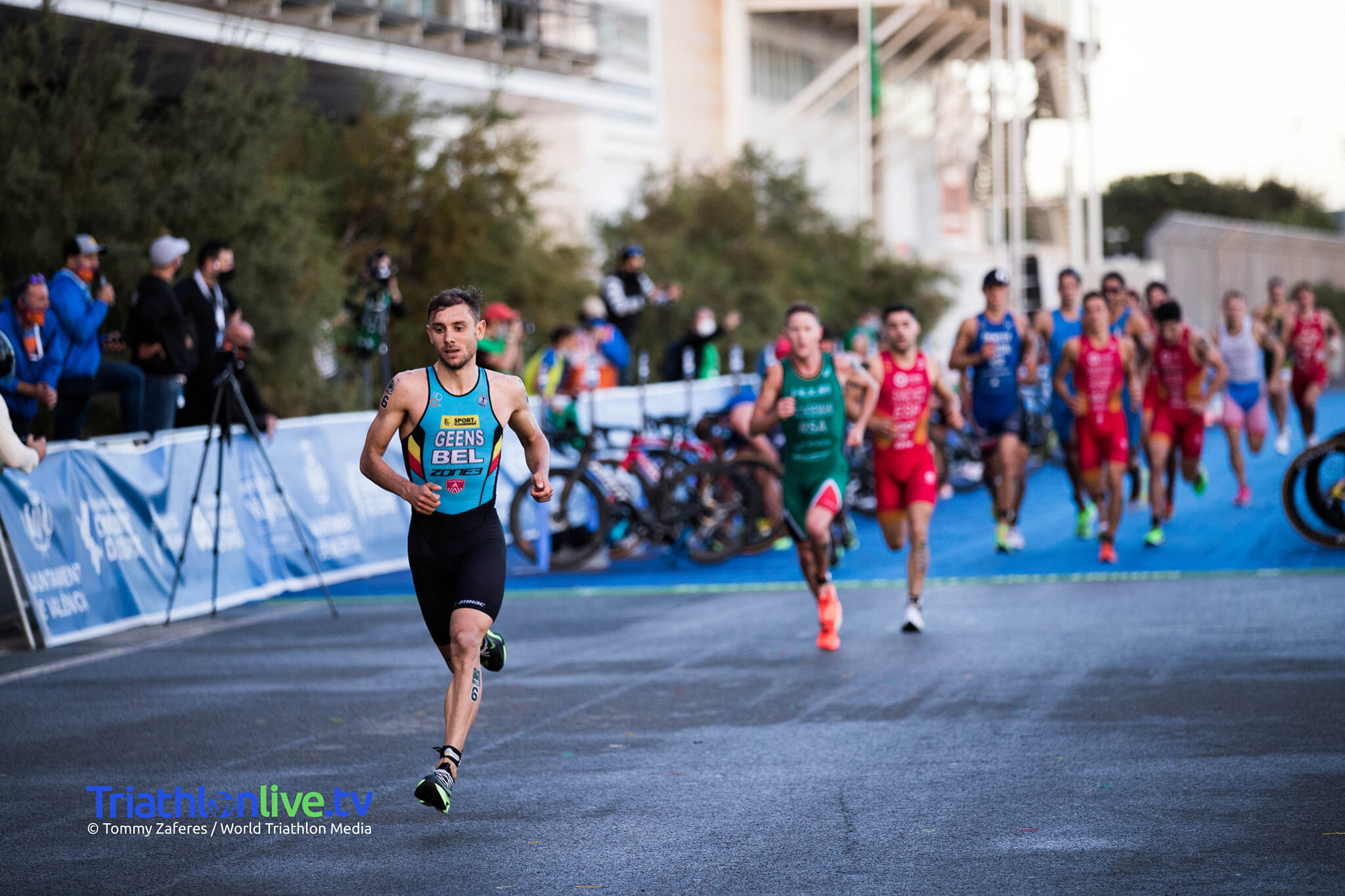
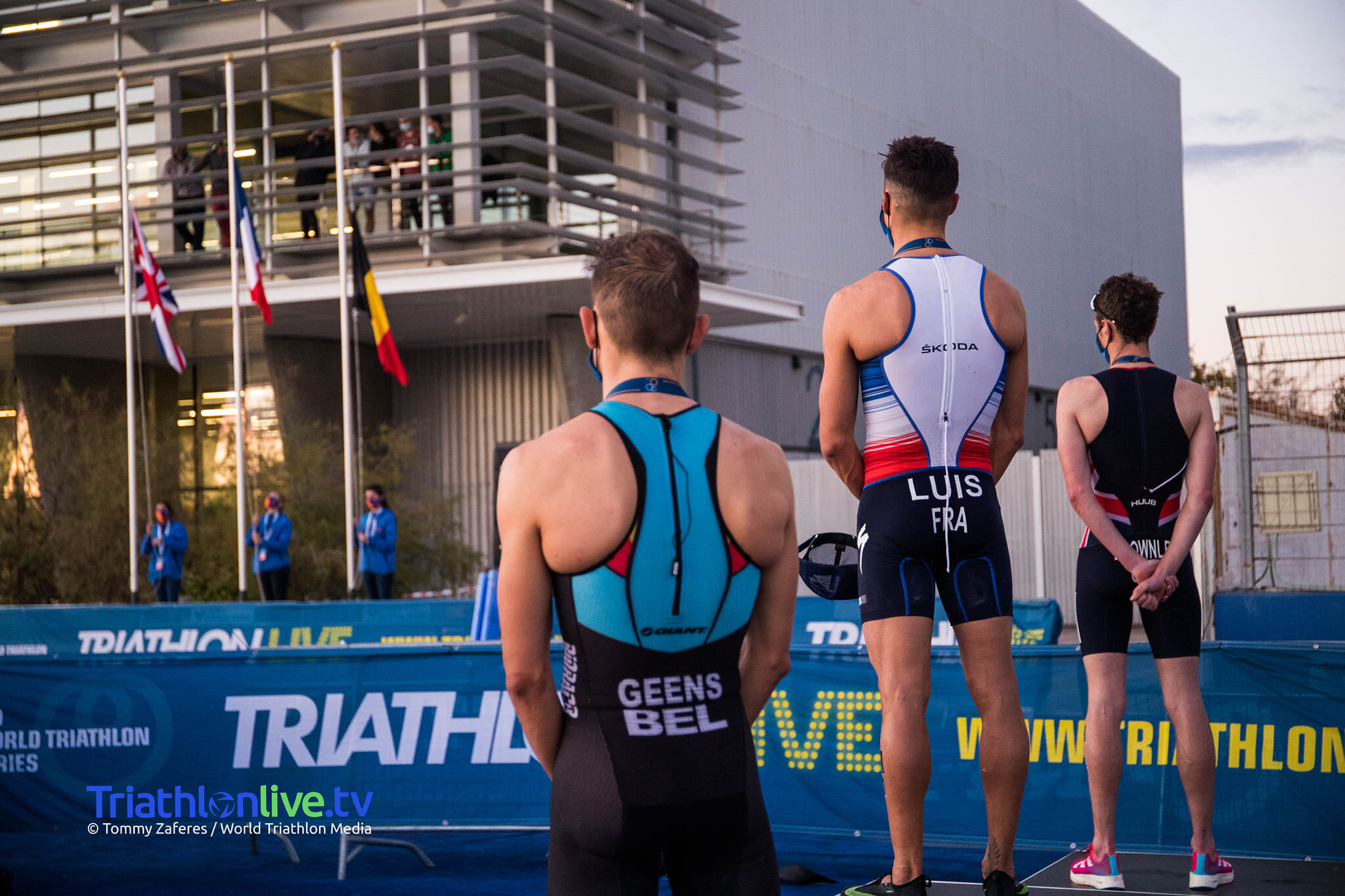
Vincent Luis winner of Valencia WC, Jelle Geens 3rd Place Photo by Tommy Zaferes / ITU Media
Posted
Posted

Posted
Part 4 of the 4 four part documentary series on three-time ITU World Champion Mario Mola. Spanish language.
https://www.redbull.com/es-es/triatlon-mario-mola-documental-metodico-obstinado-lider-apasionado
Posted
Part 3 of the 4 four part documentary series on three-time ITU World Champion Mario Mola. Spanish language.
https://www.redbull.com/es-es/triatlon-mario-mola-documental-metodico-obstinado-lider-apasionado
Posted
Part 2 of the 4 four part documentary series on three-time ITU World Champion Mario Mola. Spanish language.
https://www.redbull.com/es-es/triatlon-mario-mola-documental-metodico-obstinado-lider-apasionado
Posted
A 4 four part documentary series on three-time ITU World Champion Mario Mola. Spanish language.
https://www.redbull.com/es-es/triatlon-mario-mola-documental-metodico-obstinado-lider-apasionado
Posted


Posted


Posted

“Joel Filliol: “The best monitoring is coaches paying attention”
In this 2nd part of the Episode 3 we keep talking with Joel about interesting aspects of training. Particularly, about how he designs the training process, the job of the coach, what he thinks about technologies and training data as well as what he recommends in terms of training load.”
In this podcast interview Joel engages in a discussion about about coaching, training program design, and how to manage data and technology in the training process.
Part 2 here:
Spotify: https://open.spotify.com/episode/4CGs047no0RzcX2qC8AO6d
Part 1 here:
Ivoox: https://www.ivoox.com/joel-filliol-athletes-are-part-of-a-system-audios-mp3_rf_54016166_1.html
Spotify: https://open.spotify.com/episode/0Vqk8cnqN28KG5kHGRdMzq?si=le3H8qYTR1yfVdhL1nLGuA
Apple: https://podcasts.apple.com/es/podcast/linking-theory-and-practice/id1521704736
Posted

“Joel Filliol: “Athletes are part of a system and they really need to be involved in what training and environment is”
In this 1st part of the Episode 3 we talk with Joel about how he understands and designs the training, how he uses training data as well as how important is the self-management of the athletes.
Made by: Pablo Vázquez, Jordi Martín and Lluc Montull.”
In this podcast interview Joel engages in a discussion about sports science and triathlon, the minimum effective dose model, and how squad training drives performance improvement.
Part 1 here:
Ivoox: https://www.ivoox.com/joel-filliol-athletes-are-part-of-a-system-audios-mp3_rf_54016166_1.html
Spotify: https://open.spotify.com/episode/0Vqk8cnqN28KG5kHGRdMzq?si=le3H8qYTR1yfVdhL1nLGuA
Apple: https://podcasts.apple.com/es/podcast/linking-theory-and-practice/id1521704736
Part 2 here:
Spotify: https://open.spotify.com/episode/4CGs047no0RzcX2qC8AO6d
Posted

Greg Bennett’s podcast BE with Champions with Joel Filliol
“Joel describes how he’s developed his coaching technique via learning from the athletes he’s worked with. All the various athletes have given him enormous feedback.
Joel’s coaching philosophy is “What is the minimal effective dose an athlete can do to achieve the desired outcome?”. He describes the importance of finding a training program that allows the athletes to be consistent, daily, weekly, monthly, yearly... ideally not needing any days off. If you need a day off then the program was too much. If you’re taking a day off and you don’t need the day off, then it’s a wasted day. Finding the right balance for each athlete is an art as much as a science.”
Listen to the episode on BE With Champions and iTunes and BE Podcast page
Posted

Posted

In episode 192 of The Physical Performance Show Brad Beer shares a conversation with Joel Filliol, Elite Triathlon Coach, Olympic Performance Director Italian Triathlon Federation in this coaches corner edition.
Joel was a guest on the Physical Performance Show podcast with therapist Brad Beer - listen here on Itunes or SoundCloud
Topics included:
The Culture of Coaching
Social Media Exposure for athletes and coaches
Decision Fatigue
Joel’s career in coaching
Cultural elements in a team
Training seasons and camps
The model of high performance
Keeping the basics simple
The Power of the daily environment
Managing training load
Definition of a coach
Posted